Early-stage deal platform
Otaris
Investors had no way into curated early-stage deals and no way to sell vested allocations, so I designed the whole investor platform, from onboarding to a marketplace for partial allocations, and it was fully designed when the company pivoted before launch.
- Role
- Founding Product Designer
- Dates
- 2021 - 2022
- Team
- Product, design and engineering
Outcome
- Otaris did not launch in its original form. The company pivoted to Web3 startup services before release, so there are no usage numbers.
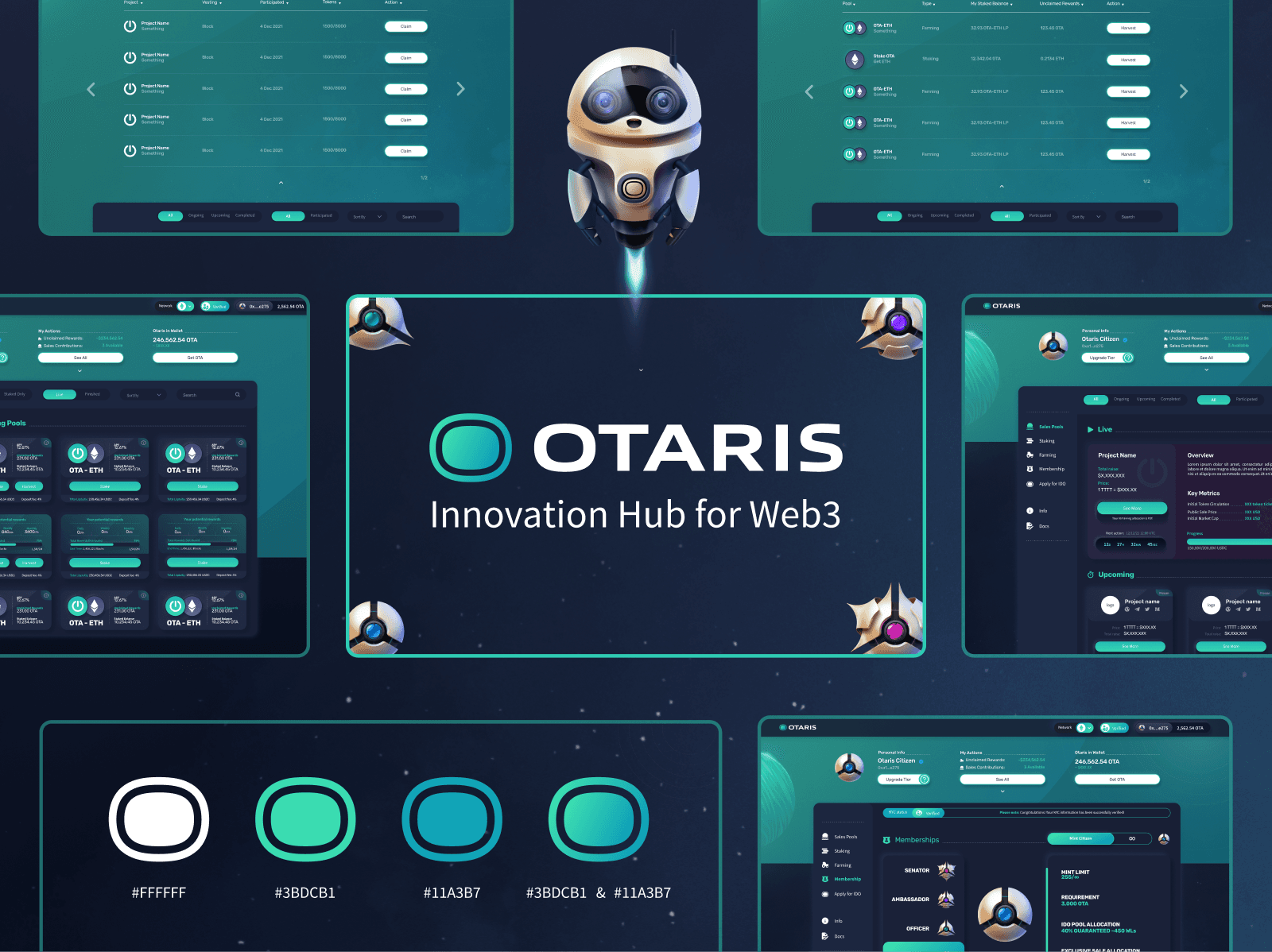
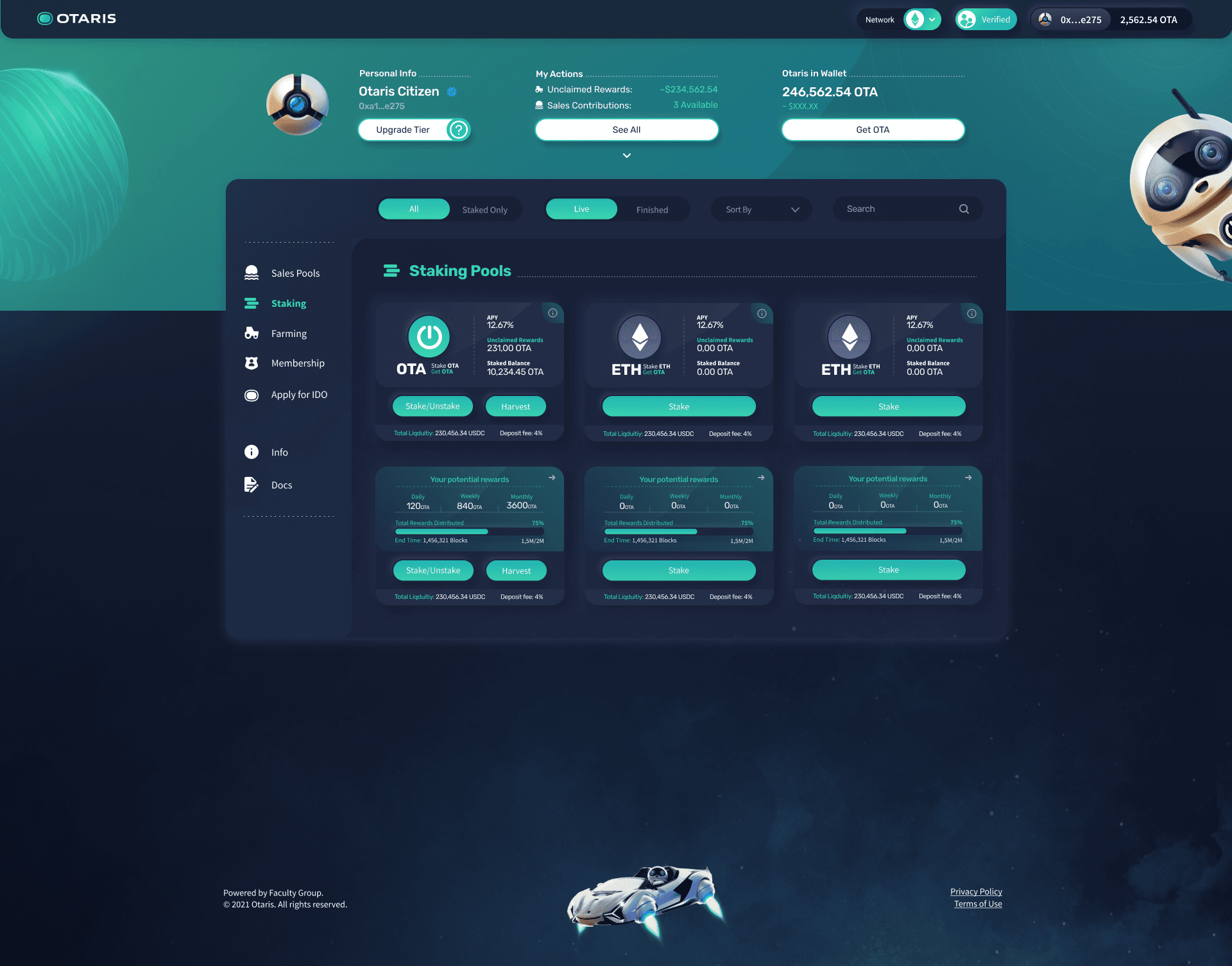
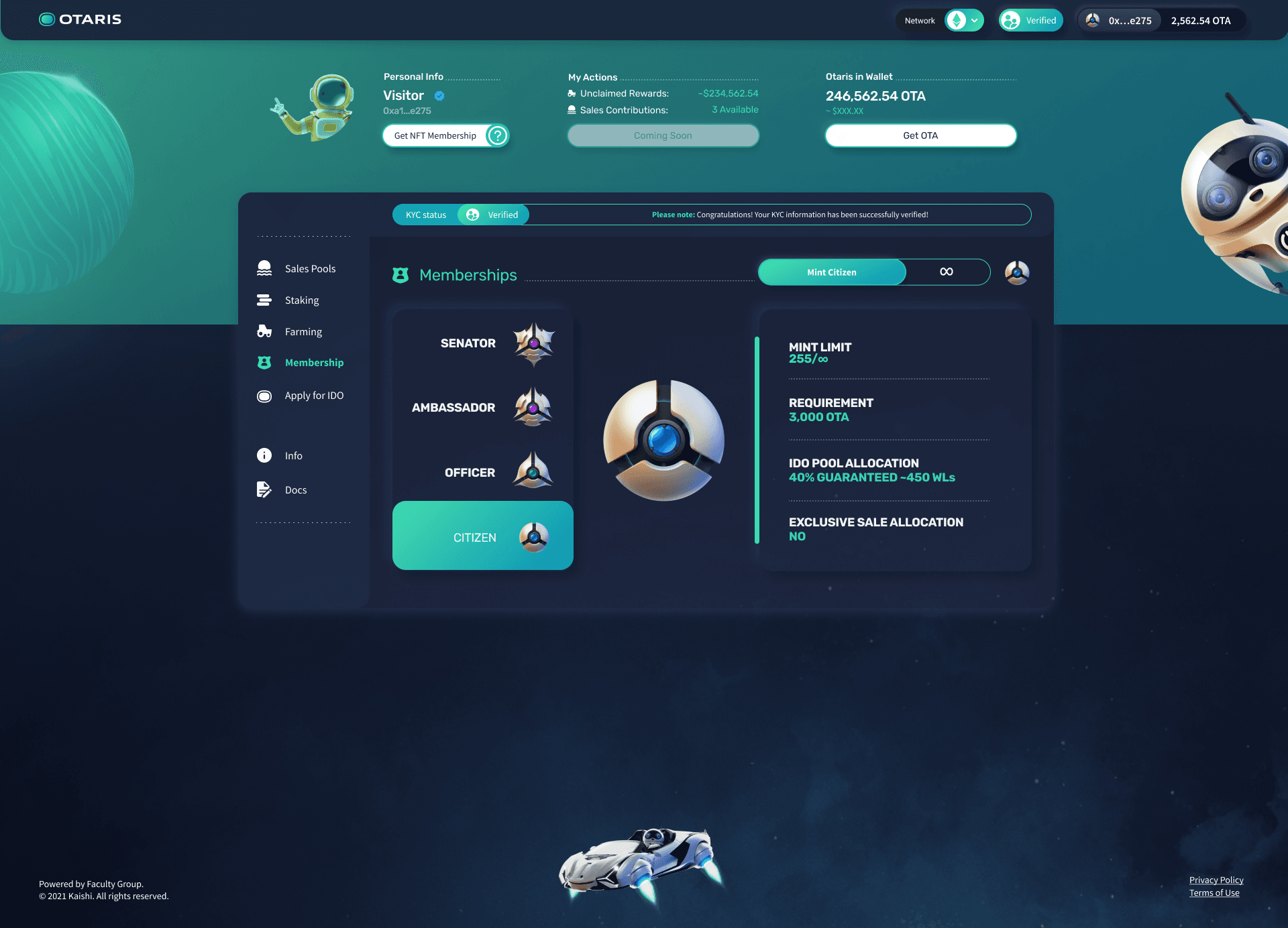
- What exists is a fully designed investor platform, from onboarding and NFT tiers to staking, claiming and a secondary marketplace, plus the admin side for launching sales.
The product

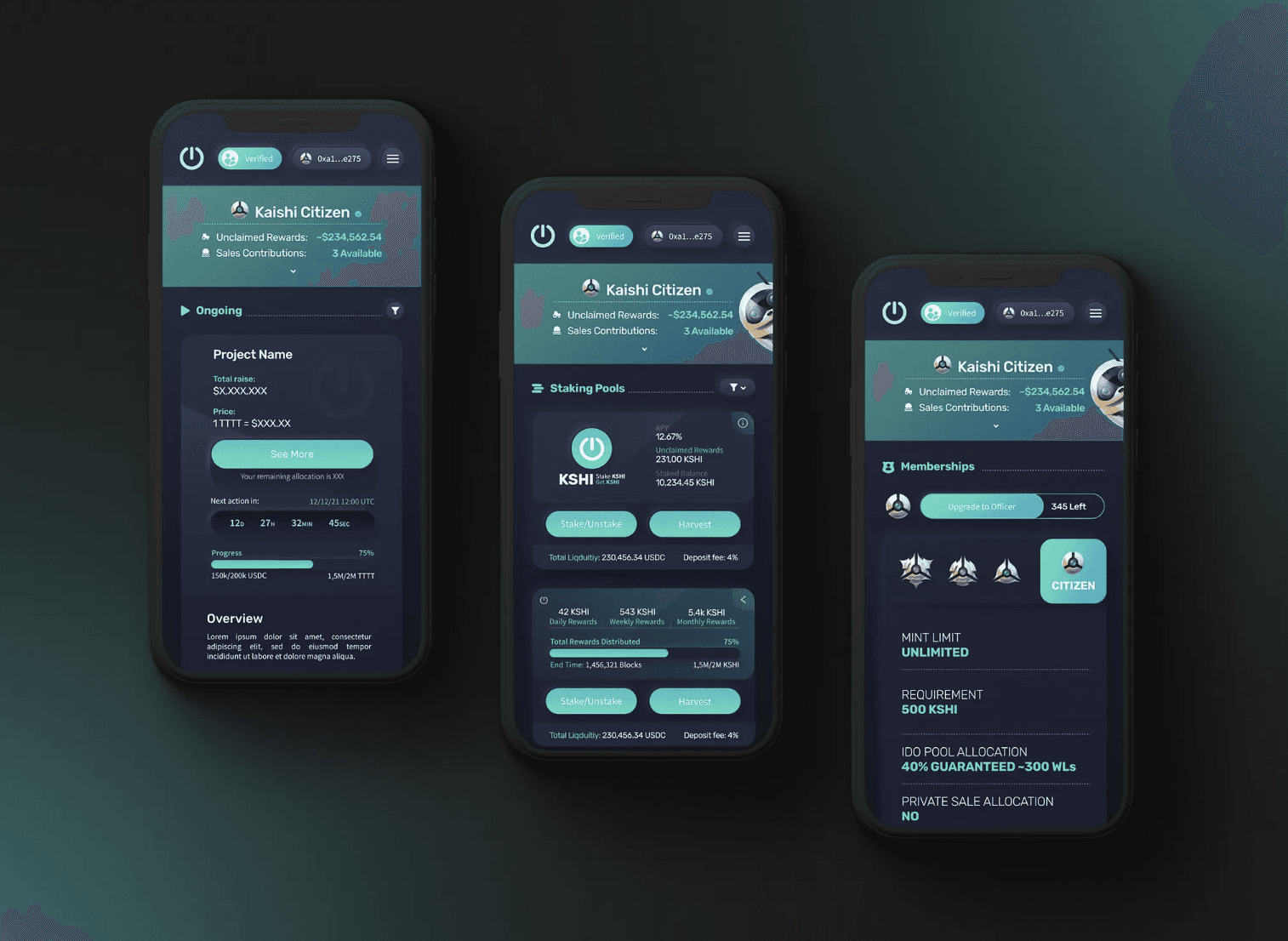
The problem
Otaris was a two-sided marketplace. Investors bought NFT tiers for access to curated early-stage deals; after investing they could track allocations, claim vested tokens, farm and stake, and trade allocations on a built-in secondary market. Startups got a structured way to launch. On the investor side the gaps were access and liquidity: no way into curated deals and no way to sell a vested allocation. On the startup side it was launch infrastructure and finding the right investors. All of that tokenomics had to become a platform an ordinary investor could use, with trust anchored in patterns they already knew.
What discovery showed
- Liquidity traders, allocation seekers and capital-seeking builders wanted different things from the same screens
- Familiar portfolio patterns did more for trust than any novel interaction
Key decisions
Trade partial allocations, not whole accounts
The only way out of a position was a full exit, which left liquidity locked and gave investors no way to act on a single project.
I designed the marketplace around trading individual project allocations, with asks and bids per tier, so an investor can sell part of a position and keep the rest.
Result. A granular liquidity layer that matched how the three investor types behaved. The marketplace is the second screen above.
An admin panel for launching sales
Every project launch was manual coordination between the team and the startup, and it would not have survived more than a handful of projects.
I designed an admin dashboard where a startup configures the sale, vesting schedule and tokenomics, with a status track from draft to vesting created on chain.
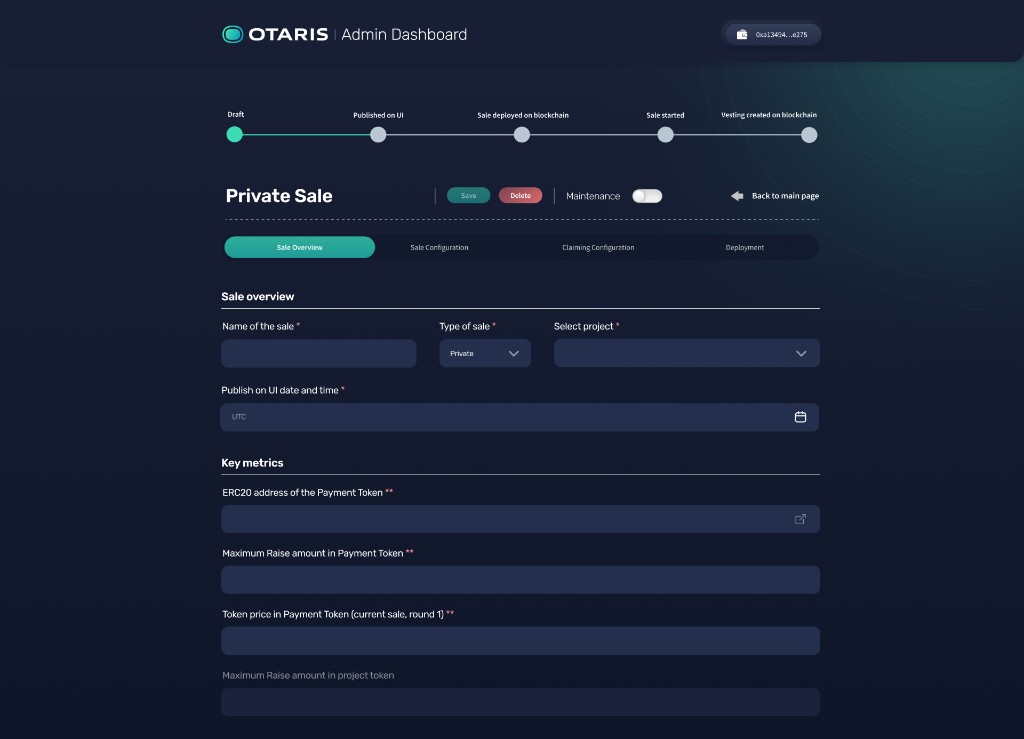
Result. Launch structures became standard and manual coordination fell away as more projects came in.
Uncapped lower NFT tiers
The CEO wanted hard caps on every tier to make them scarce. The lower tiers had modest benefits, so a cap would have meant less revenue for the company and users left out for no real gain.
I argued for capping only the premium tiers and controlling allocation sizes instead, and that is what we designed.
Made against the founders' preference at the time
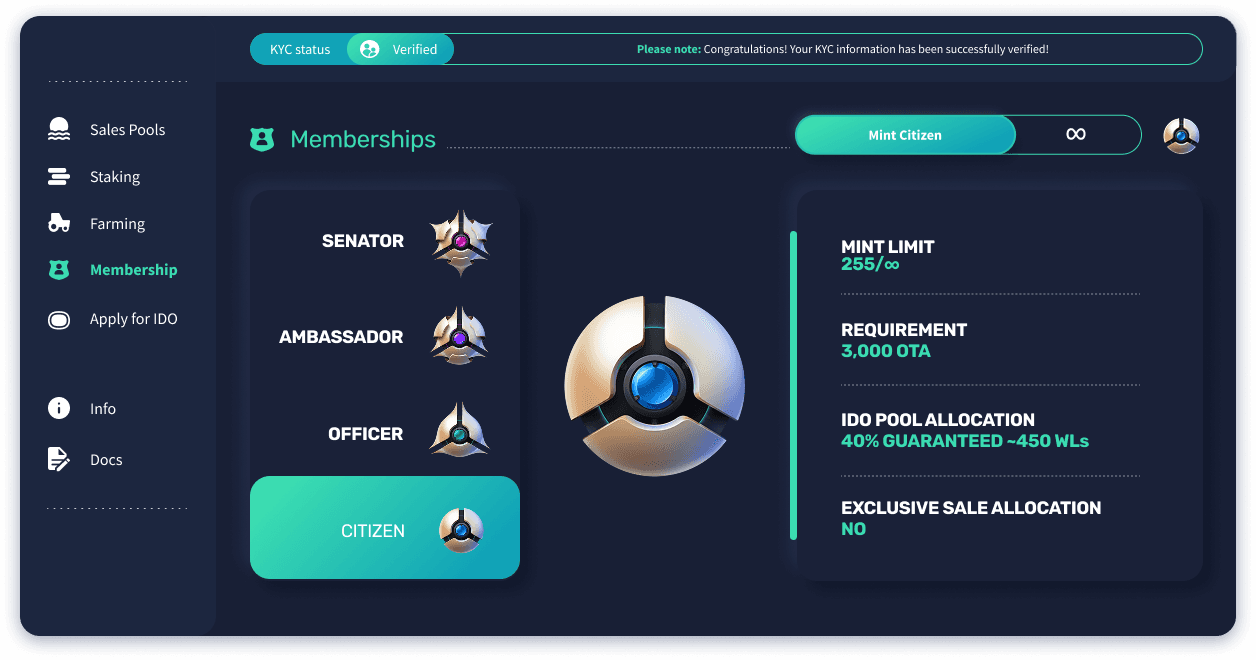
Result. Entry stayed open while the premium tiers kept their exclusivity.
Reflection
- Marketplace systems are incentive systems. Liquidity mechanics shape behaviour as much as the interface does.
- Financial products need trust grounded in familiar patterns.
- Organisational alignment is a product risk like any other.